SME tender and RFP workload: what to measure before you automate

In UK search and team language, tender carries most of the signal; RFP and PQQ are often what the pack is called. The workload is the same: evidence, deadlines, mandatory questions, and reviewers under pressure. This note sets out what to baseline, what to stop doing badly, and how to pilot structured automation — without handing accountability to a model.

If you are a UK SME bidding into the public sector, frameworks, or large private programmes, you already know the pattern — whether the tender pack is labelled ITT, PQQ, SQ, or RFP: short windows, mandatory questions multiply, and the “final” version lives in six versions of the same spreadsheet. Leadership asks whether AI can help; bid owners worry about hallucinations, confidentiality, and who signs the submission. Everyone is right to be cautious — which is why measurement and scope discipline come before any tool choice. The same pilot habits we describe for general automation in KPIs for AI pilots that hold up apply here, with tender-specific twists.

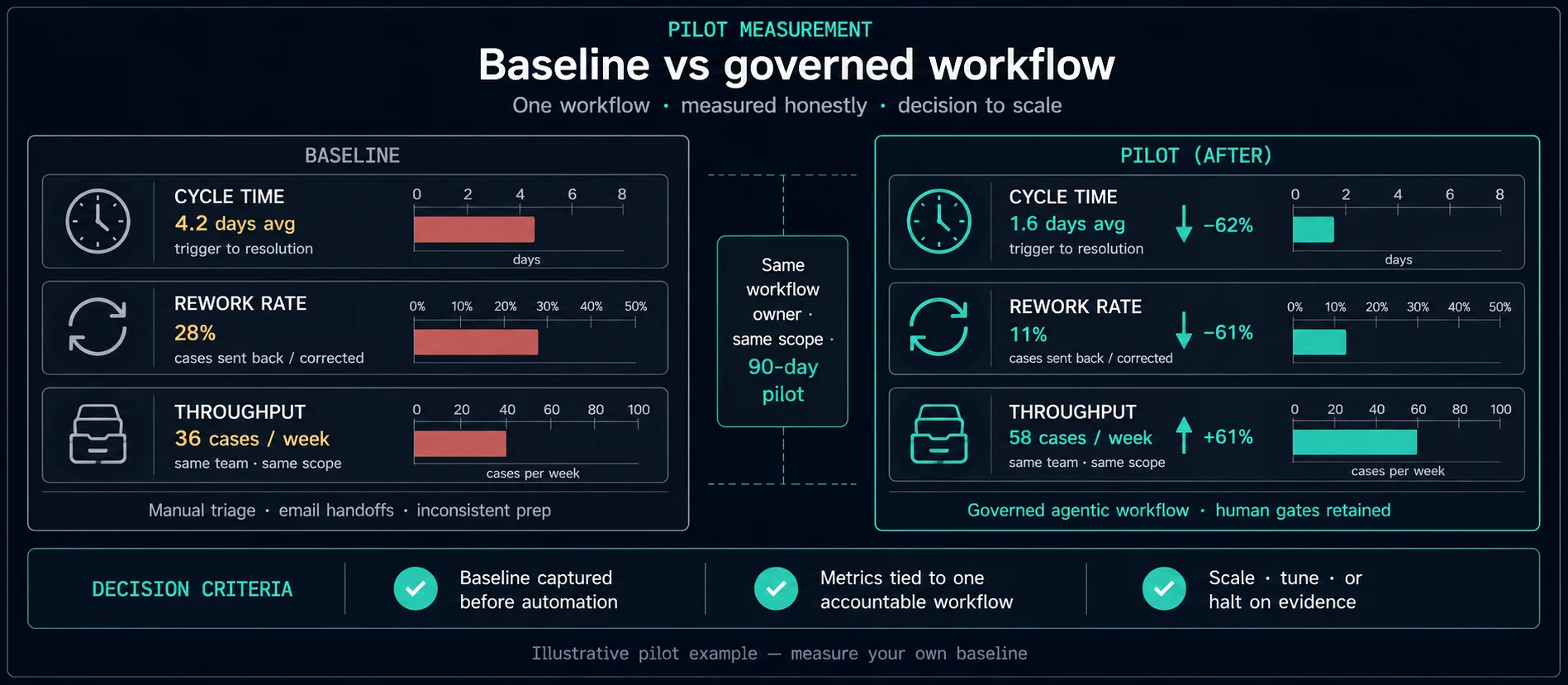
Log three baselines before you change the process: (1) Hours from pack receipt to internal “ready for review” — split by triage, evidence gathering, drafting, and compliance pass. (2) Rework — how many answer cycles per section after first review. (3) Unforced defects — missed mandatory questions, word-count breaches, wrong attachments, or evidence that cannot be traced to source. Without those three, “we saved time with AI” will not survive a serious steering conversation.

Why workload explodes (and “faster drafts” is not enough)

Most of the drag is not typing speed. It is understanding what evaluators will score, finding defensible evidence in old submissions and project files, reconciling contradictory instructions across volumes, and making sure commercial and legal are comfortable with every claim. Tools that only generate prose accelerate the wrong failure mode: polished text with weak traceability. For regulated or high-stakes bids, traceability and approval gates matter as much as tone.

That is why we separate structured triage and extraction from draft generation, and keep human sign-off on the path to submission — the pattern we document on our tender response automation page. Automation should reduce search and assembly work, not replace accountability.

Bid and no-bid discipline pays for everything else

Many SMEs lose margin before the first draft: they chase opportunities with poor fit, duplicate effort across overlapping portals, or underestimate consortium and reference requirements. A simple, documented bid/no-bid checklist — fit, capacity, references, win themes, and red lines — cuts volume faster than any model. If you pilot AI, pilot it on the opportunities you would have chased anyway, so you are not confounding “we said no more often” with “the workflow got faster.”

What to automate first (and what to leave alone)

Early wins that are usually safe when bounded: parsing packs into a requirement matrix; highlighting deadlines and pass/fail criteria; mapping questions to your answer library; first-pass drafts where word limits and rubric headings are explicit; checklists for attachments and mandatory declarations.

Defer or keep heavily supervised: novel legal positions, pricing narratives you have not bid before, anything requiring live customer data in a model context you have not risk-assessed, and any step that could plausibly touch autonomous submission. No serious programme should allow autonomous submission; the human who signs retains liability.

For adjacent commercial writing (discovery notes to proposal structure), see proposal drafting from discovery notes — similar governance ideas on a smaller surface area.

A 30-day pilot shape that leadership can understand

Week one: pick one tender or bid type you repeat (for example a specific framework lot, a recurring public tender, or a private RFP-style invitation), freeze templates, and import a small set of historic submissions (redacted if needed). Week two: define the requirement matrix, answer library sources reviewers trust, and where human approval happens. Week three: run two or three opportunities end-to-end on the new path alongside your current method if possible — same metrics, same definitions. Week four: compare draft turnaround, reviewer hours, and unforced defect rate against the baseline. If quality moved in the wrong direction, narrow scope before you scale.

This mirrors the “first 30 days” structure we publish with the tender response workflow so operators can align internal comms with delivery.

Try the gated simulator when you are ready

We keep a company-email gated walkthrough of the Tender Command Centre so visitors can see how triage, extraction, and review gates fit together — without pretending a demo replaces your own governance review. Start from the tender response automation page and use View live demo to reach the tender demo (access step required). The simulator illustrates workflow sequencing; it is not a production SLA or audited benchmark.

Regional delivery, same rules

Whether you are in the Midlands, Birmingham, or Leicester, the sequencing is the same: baseline workload, tighten bid/no-bid, then pilot structured assistance with explicit quality gates. For broader adoption sequencing on agentic programmes, see Agentic AI for Midlands SMEs: where to start and our agentic AI consultancy capability page.